Dream experiences
I Dreamed I Woke Up: What Is a False Awakening?
You got out of bed, saw your room or began the ordinary morning. Then you woke up and realised that first awakening had happened in a dream.
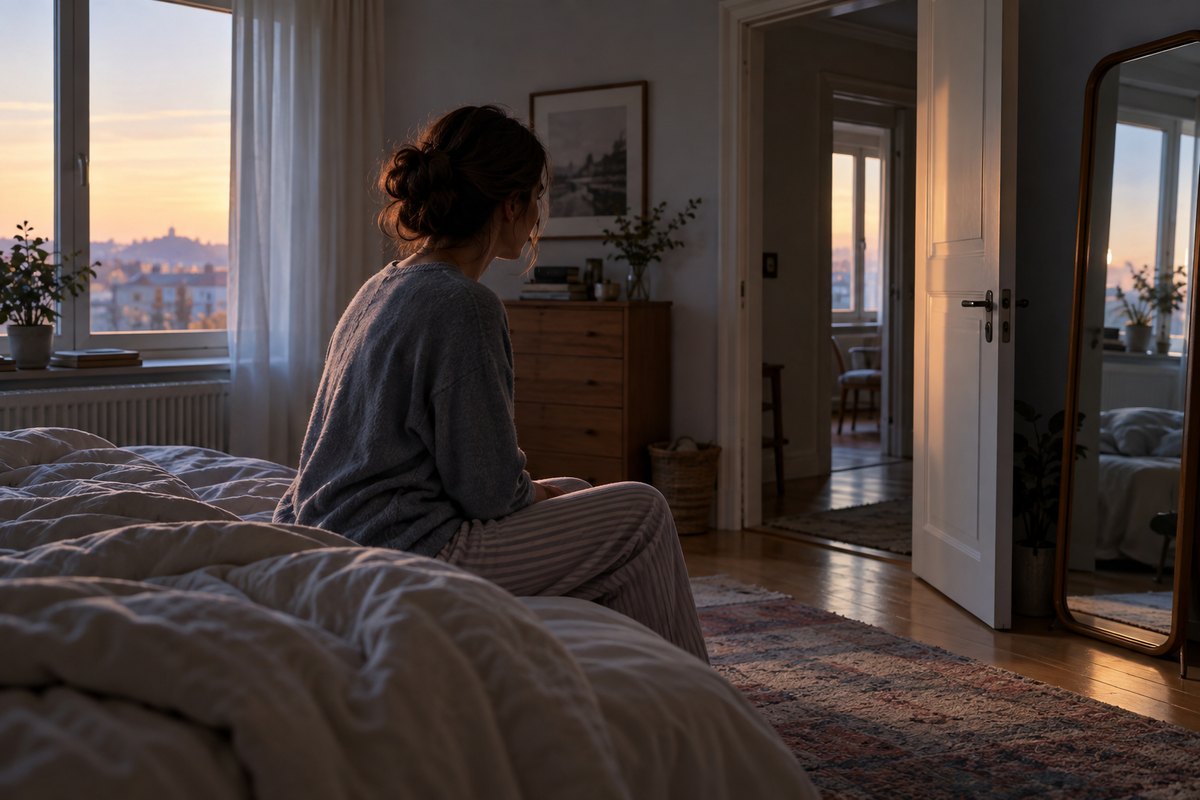
A false awakening is a dream in which you believe you have woken up while you are still asleep. Your familiar bedroom, alarm or morning routine can be part of that dream. Only when you really wake do you recognise the earlier “awakening” as a scene you dreamed.
The dream can include an ordinary morning
You might dream that the alarm rang, that you checked a message or that you walked into the kitchen. You may even think about the work ahead or tell someone what time it is. The scene borrows its authority from familiar details and the ordinary assumption that the day has begun. Nothing uncanny has to happen for you to believe it.
The useful question is what you believed inside that first scene. “I thought it was already Tuesday and I had missed the bus” tells you more about the experience than a general list of dream symbols. The scene may have felt curious, unsettling or entirely mundane. Its realism does not turn it into a prediction or reveal a personal cause.
What if you woke up more than once?
Sometimes a person dreams of waking, notices something strange, and then dreams of waking again. The second room can seem to correct the first, only for a later waking to reveal that both were dream scenes. You might remember two distinct starts to the day, or only the conviction that you had already got up before you finally opened your eyes.
It helps to describe each apparent waking in order, without demanding a perfect timeline. In the first, what made you believe you were awake? In the next, did you recognise the previous scene as a dream, and did you believe this new one was real? The number of layers is less important than the changing belief within them.
False awakening, lucid dreaming and sleep paralysis
An ordinary dream may also include your bedroom, but its story need not convince you that you have just awakened into your actual day. In a lucid dream, you know you are dreaming while the scene continues. In a false awakening, you believe you have already woken. One can turn into the other if you recognise the mistaken waking while still asleep. What matters is what you believed then, not how realistic the room seems in hindsight.
When you actually wake, the dream scene has ended, even if its fear or confusion remains; our after-nightmare guide starts there. Sleep paralysis involves awareness around waking or falling asleep with a temporary inability to move. A dreamed inability to move and that waking experience are not the same observation. Memories can be uncertain, and an article cannot diagnose an episode from a description.
Why can it feel so strange afterward?
You may have to revise a memory you had just accepted as today's first moments: the alarm, the conversation, the task you thought you had completed. That contrast between confidence inside the dream and recognition after waking can linger. Feeling unsettled does not mean that you were never awake afterward or that the experience has a hidden message.
If the confusion is still fresh, orient yourself to the room you are in and let the ordinary day take shape before trying to interpret the scene. You can also decide that no interpretation is needed.
What was different when you really woke?
Try three short notes: “In the dream I thought I had woken because…”, “then I did or saw…”, and “when I actually woke, I noticed…”. A different light, a clock, a conversation or simply the sudden recognition that the first scene was not waking life may be all you have. Keep the order only if you remember it; do not invent a missing bridge.
If you feel unsettled now, take a moment with the actual room and a familiar object before analysing anything. You can leave the dream alone. Recording it is an option for understanding your own experience, not a required test of whether you are truly awake.
If the experience keeps troubling you
A single remembered episode says little about your health. If apparent awakenings recur, disrupt your sleep, cause persistent fear of sleeping or appear alongside other concerning symptoms, a clinician or sleep professional can consider the whole picture. You do not need to reproduce the experience or work out its cause on your own before seeking help.